5 Different Puzzle Game Book Interiors: Build Better Activity Books for KDP Without Wasting Time or Money
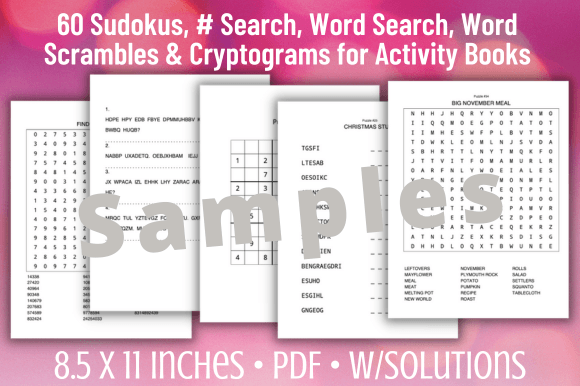
Creating activity books for KDP can be a profitable and creative way to build a publishing catalog. But many new publishers rush in, buy the first puzzle interiors they find, and end up with books that feel generic, don't print well, or take far too long to assemble. The 5 Different Puzzle Game Book Interiors bundle changes that. It gives you 60 puzzles per type—cryptograms, sudoku, word searches, and word scrambles—all in an 8.5 x 11 inch, no-bleed format. That means you can mix and match, add coloring pages or other puzzle types, and build a unique activity book in minutes. But only if you use it correctly.
This article walks through the common mistakes people make with puzzle interiors like these, and how to avoid them. Whether you are a beginner or an experienced KDP publisher, these practical corrections will save you time, money, and frustration.
Understanding What This Bundle Actually Gives You
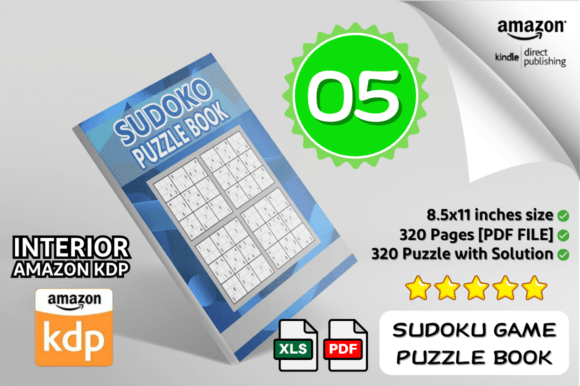
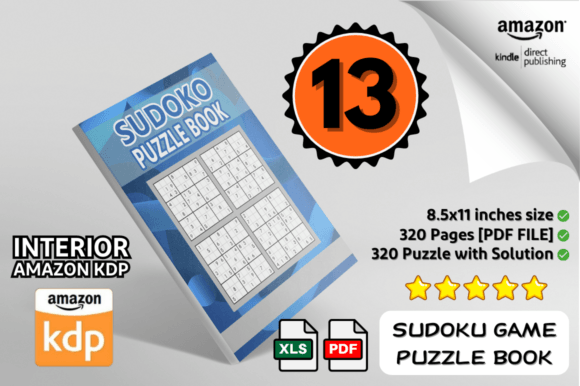
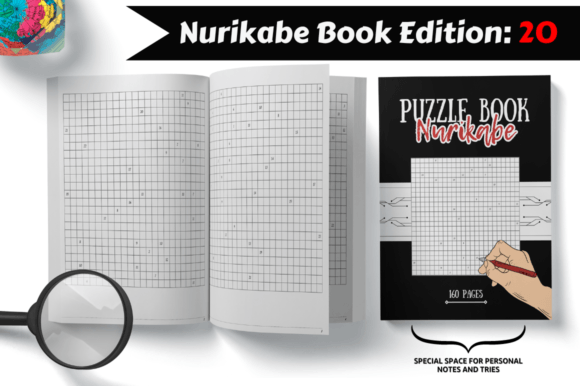
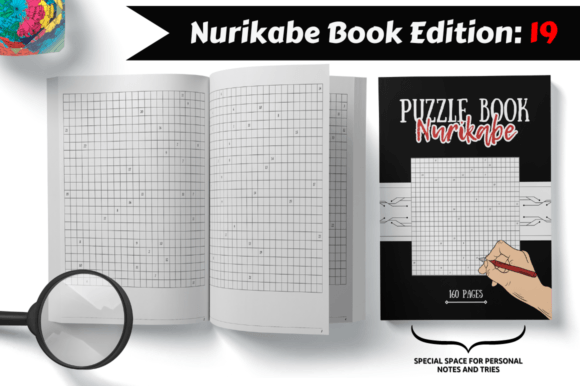
The bundle includes five distinct puzzle game book interiors. Each interior comes with 60 puzzles: cryptograms, sudoku, word searches, and word scrambles. That is a total of 240 unique puzzles across the five interiors, plus solutions for every puzzle. The files are PDFs, formatted at 8.5 x 11 inches with no bleed. That means you can use them directly for print-on-demand without having to adjust margins or trim sizes.
What many people miss: these are digital products you edit yourself. You are not buying finished books. You are buying raw puzzle content that you arrange, combine, and personalize. That is a huge advantage, but it also comes with responsibilities. If you treat them like finished books, you will likely publish something that feels disconnected or incomplete.
A common misunderstanding is that "no bleed" means no formatting work. It actually means the content stays within the safe printable area, so you do not have to extend images or backgrounds to the edge. That saves time, but you still need to check how the pages look when assembled into a book.
Mistake: Editing Without Making a Duplicate Copy First
This is the single most avoidable error. The product description explicitly recommends making a duplicate copy before you start editing. Many people skip this step, edit the original file, and then realize they need a fresh version for another book. By then, the original is gone.
When you open a PDF from the bundle, save a copy immediately. Name it something like "Original Backup - Cryptograms Interior.pdf" and store it in a separate folder. Then work on the copy. This way, you always have a clean file to return to if you make a mistake or want to create a different variation later. It takes ten seconds and prevents hours of frustration.
If you accidentally overwrite the original, you may have to purchase the bundle again. That is a costly oversight that is entirely preventable.
Mistake: Overlooking the PDF Modifiability Factor
The bundle includes PDF files that can be modified using a PDF converter. That is not the same as saying they are fully editable in every program. Some PDFs are locked or flattened, but these are intended to be edited. You will need software that handles PDF conversion reliably. Adobe Acrobat Pro, Affinity Publisher, or even Canva with a PDF upload feature can work, but each handles PDFs differently.
A common mistake is trying to edit the PDF directly in a free reader. That rarely works. Instead, convert the PDF to a format your design software supports—usually PNG, JPG, or a layered PDF. Once converted, you can rearrange puzzles, change the order, add headers, or combine pages from different interiors.
Another overlooked detail: when you convert a PDF, the resolution can drop if you use low-quality settings. Always export at 300 DPI for print. The interiors are designed at that resolution, but a poor conversion can make puzzles look blurry or pixelated on paper. Check your export settings before assembling your final book.
Mistake: Using Only One Puzzle Type Instead of Mixing
The bundle contains five different interiors, each with four puzzle types. That means you can mix cryptograms, sudoku, word searches, and word scrambles in countless combinations. Yet many publishers pick one interior and use it as-is. That is fine for a niche book, but it misses the bundle's real strength: variety.
Activity books that include only one type of puzzle can feel repetitive. A book with only sudoku puzzles might appeal to sudoku fans, but it limits your audience. By mixing puzzle types, you create a book that keeps readers engaged longer. Someone who finishes a word search can move to a cryptogram, then to a sudoku. That variety encourages people to buy the book for multiple uses—travel, relaxation, brain training, or family fun.
For example, you could create a book with 20 word searches, 20 sudoku puzzles, 20 cryptograms, and 20 word scrambles. That gives you 80 puzzles total. Or you could make a book with 30 word searches and 30 sudoku puzzles. The flexibility is there. The mistake is not using it.
Mistake: Ignoring the Solution Pages
Every puzzle in this bundle includes a solution. That is a huge time-saver if you have ever had to solve puzzles yourself to create answer keys. But some publishers remove solution pages because they take up space, or they place them at the back without checking page numbering.
If you remove solutions, readers have no way to check their answers unless you provide an alternate method. That can frustrate users and lead to negative reviews. If you keep solutions but place them in the wrong order, readers cannot find them easily.
The better approach: place all solutions at the end of the book, in the same order as the puzzles appear. Include a clear header on each solution page that references the puzzle number or title. This is a small detail that makes your book feel professional and complete.
Also, double-check that the solution matches the puzzle. In rare cases, formatting changes during PDF conversion can shift text or numbers. Verify at least a few puzzles per interior to ensure accuracy.
Mistake: Not Checking Bleed and Trim Settings
These interiors are specified as "no bleed," which means they are safe to print without extending artwork to the edge. That is correct for many KDP books, but only if you set your trim size to exactly 8.5 x 11 inches. If you change the trim size or add a bleed to your manuscript file without adjusting the puzzle pages, the content can shift or get cut off.
Here is how to avoid that: keep your book trim size at 8.5 x 11. When you upload to KDP, select "no bleed" for the manuscript. Then place each puzzle page exactly at the center of the page or use the same margins as the original file. Most design software lets you import the PDF and position it automatically. If you add other elements like borders or headers, make sure they stay within the safe zone (about 0.25 inches from the edge).
If you do add bleed to your book, you will need to extend the background of each puzzle page yourself. That can be done, but it adds time. For most activity books, no bleed is perfectly fine and saves work.
What to Check Before You Start Building Your Book
Before you combine any puzzles or create a new interior, take these steps:
- Verify file integrity: Open each PDF and scroll through all 60 puzzles and solutions. Make sure no pages are missing, garbled, or corrupted. If you downloaded the files, check that the download completed fully.
- Decide your book structure: Will you use one puzzle type per book, or mix them? Will you include a table of contents? How many puzzles per page? These decisions affect how you arrange the files.
- Test a print sample: Print one or two pages from your assembled book on your home printer. Check that the puzzle text is readable, the grid lines are clear, and the overall layout looks balanced. This catches issues that the screen cannot show.
- Check for duplicate puzzles: Because the bundle includes five interiors, some puzzle content might repeat or be very similar. Skim a few puzzles across interiors to confirm variety. If duplicates exist, you can remove them or use them in separate books.
These checks take less than an hour and can prevent a poor-quality book release that could hurt your KDP account standing.
Practical Advice for Mixing and Matching
Once you have verified the files, the creative work begins. The bundle is designed so you can mix and match interiors easily. Here is a process that works well:
- Open your design software and set up a document at 8.5 x 11 inches with no bleed.
- Import puzzle pages from different interiors. You can drag and drop from the PDF files if your software supports it.
- Arrange puzzles in a logical order. Many successful activity books alternate puzzle types so readers get a change of pace every two to three pages.
- Add a simple header at the top of each puzzle page (e.g., "Word Search 1" or "Cryptogram 5") so readers can find solutions easily.
- Place all solutions at the end, in the same order as the puzzles.
- Export as a single PDF with 300 DPI and no compression artifacts.
If you add coloring pages or other content, place them between puzzle sections or at the beginning and end. Keep the same file format and resolution so the whole book looks consistent.
Avoiding the "Too Many Puzzles, Not Enough Variety" Trap
Some publishers think that more puzzles always equals more value. But an activity book with 200 word searches can feel monotonous. The bundle gives you 60 of each puzzle type per interior, which is plenty to create variety without overloading the reader.
A better approach: select 20 to 30 puzzles from each type and combine them into a book of 80 to 120 pages. That gives you a robust product that feels curated, not dumped. You can always create multiple volumes if you have leftover puzzles. This also lets you test different combinations and see which ones sell best.
For instance, you might create one book focused on word searches and cryptograms for adults, and another with sudoku and word scrambles for teens. Both use the same bundle, but target different audiences. That is the real power of this product.
Final Thoughts on Using This Bundle Effectively
The 5 Different Puzzle Game Book Interiors bundle is a practical tool for anyone building activity books on KDP. It saves you the time of creating puzzles from scratch, gives you a consistent format, and includes solutions. But the quality of your final book depends on how you use these files. Avoid the common mistakes outlined here—editing without backups, poor PDF conversion, ignoring solutions, and failing to check print settings—and you will produce books that readers enjoy and that perform well in the marketplace.
Take the time to plan your book structure, test your files, and mix puzzle types strategically. That effort pays off in better reviews, higher sales, and a stronger reputation as a publisher. The bundle gives you the ingredients; you just need to assemble them wisely.