Sudoku Puzzle Book Very Easy Part 05: Build Momentum Without the Frustration
Most puzzle books look the same. You crack the spine, flip to page one, and immediately hit a wall because the difficulty curve is steep and punishing. That approach works if you already have years of solving experience, but for anyone looking to build confidence or simply pass time without mental strain, it is a quick route to abandonment.
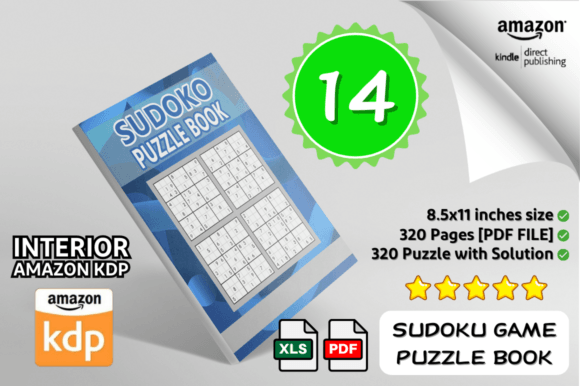
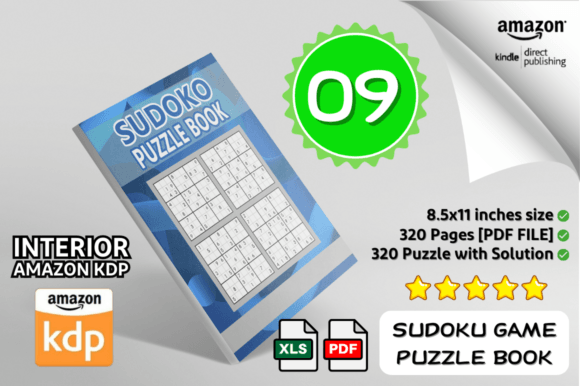
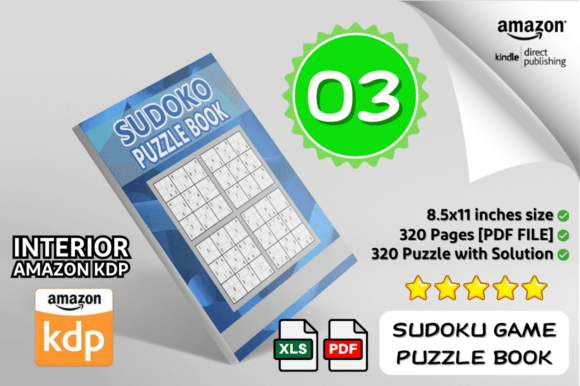
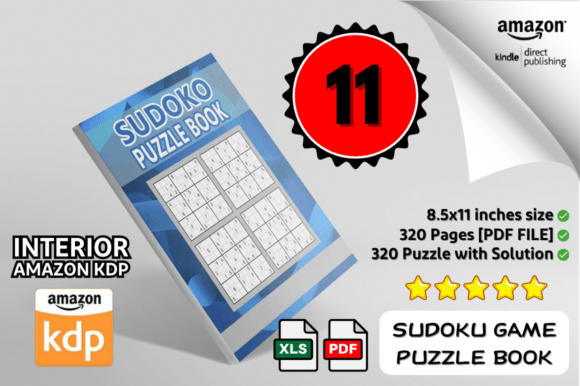
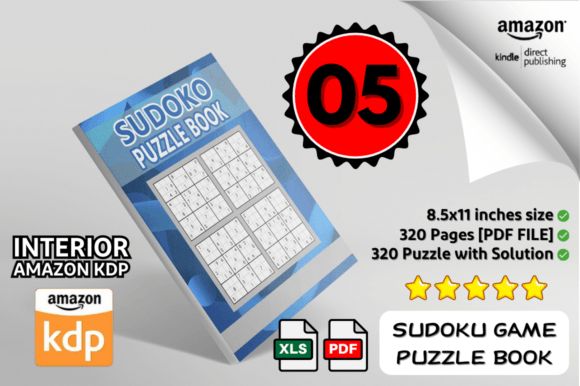
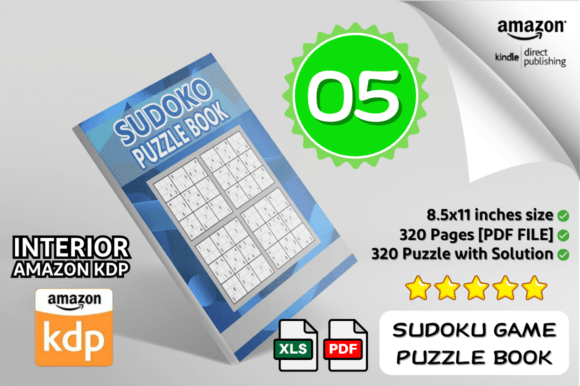
Sudoku Puzzle Book Very Easy Part 05 flips the script. This is not a random collection of grids thrown together to pad a page count. It is a deliberately curated set of 320 puzzles that start at genuinely low difficulty and stay there long enough for you to develop muscle memory for deduction, scanning, and placement. The result is a book that actually respects your time and energy.
If you have ever tried to learn Sudoku from a newspaper or a free app only to feel lost after the first few puzzles, this book is the reset you need. It removes the intimidation factor and replaces it with steady, confidence-building practice.
A Layout That Lets You Focus on the Numbers, Not the Noise
One of the first things you notice when you open this book is how clean everything looks. The grids are printed with generous spacing, and the numbers are bold enough to read at a glance without being visually overwhelming. That might sound like a small thing, but anyone who has squinted at a blurry puzzle or struggled to erase a mistake on cheap paper will tell you it matters enormously.
The interior template is user-friendly in the best sense of the term: it gets out of the way. You are not fighting smudged ink, cramped cell layouts, or faint grid lines that disappear under certain lighting. The puzzles are legible from page one, and they stay legible even after repeated erasing and rewriting. For a book designed for very easy puzzles, that attention to readability makes all the difference between a pleasant session and a frustrating one.
From a design perspective, this book achieves something that many puzzle publications miss: it creates a visual hierarchy that guides the eye naturally. The puzzle number, the grid itself, and the empty cells all have enough breathing room that you never feel crowded. That matters more than most people realize because cognitive load is not just about the numbers you are solving—it is also about the visual environment in which you solve them.
Who Benefits Most from a Very Easy Puzzle Book
There is a common misconception that "very easy" means "only for total beginners." That is not really accurate. This book serves a much broader audience than you might expect.
- New solvers who want a patient, gradual introduction to Sudoku logic without being thrown into advanced techniques like X-wing or swordfish patterns.
- Busy professionals who need a mental reset during a lunch break or after a long meeting. Easy puzzles require just enough focus to pull you out of work mode without demanding deep concentration.
- Parents and educators introducing kids or students to logical thinking. The very easy difficulty level means younger solvers can experience success early, which builds motivation.
- Experienced solvers who want a warm-up routine. Even advanced players often start with an easy puzzle to get their brain into the right gear before tackling harder grids.
- Hobbyists and crafters who enjoy background activities while listening to podcasts, audiobooks, or music. An easy puzzle book provides the right level of engagement without stealing focus.
The 320-puzzle count is also intentional. At one puzzle per day, you have almost a full year of material. At a more relaxed pace, the book lasts even longer. That kind of volume is rare for a very easy collection because most publishers assume customers want to move up in difficulty quickly. This book assumes the opposite: that there is genuine value in staying at a comfortable level and building consistency before chasing harder challenges.
How the Design Influences Your Solving Experience
Puzzle book design is often treated as an afterthought, but it directly affects how long you can solve comfortably without eye strain or mental fatigue. The font choice and grid spacing in this book are particularly well suited for extended sessions. The numbers use a clean sans serif style that avoids decorative flourishes, so each digit is immediately recognizable. Zero ambiguity in number recognition means you spend less mental energy decoding and more energy solving.
The paper quality also deserves mention. It is thick enough to resist bleeding from standard ballpoint pens and fine liners, yet smooth enough that pencil marks erase cleanly. If you prefer to solve in pen (and many experienced solvers do), you will appreciate that the pages hold up well without ghosting on the reverse side. That attention to production quality is rare at this price point, and it makes the book feel more like a premium product than a disposable puzzle pad.
Another thoughtful detail: the solutions are placed in the back of the book rather than on the same page or the facing page. That design choice removes the temptation to accidentally glimpse the answer while you are working, which keeps the solving experience honest and satisfying. At the same time, having the solutions available means you can check your work if you get stuck, learn from your mistakes, and understand where your logic might have gone off track.
Practical Tips for Getting the Most Out of This Book
Even with a very easy puzzle book, a little strategy goes a long way. Here are a few recommendations based on how designers, marketers, and creative professionals tend to use puzzle books in their daily routines:
- Schedule a fixed time slot. Consistency matters more than duration. Fifteen minutes before the workday starts or during a morning coffee break is often enough to complete one or two puzzles.
- Use a mechanical pencil. The fine point and erasable nature of a 0.5mm mechanical pencil pair perfectly with the clean grid layout. You can write small, erase cleanly, and avoid the smudging that comes with standard wooden pencils.
- Set a timer for variety. Challenge yourself to complete a puzzle in under five minutes. Even at the very easy level, speed adds a playful layer of difficulty that keeps the book fresh over 320 puzzles.
- Pair with other design assets. Many creative professionals keep a puzzle book next to their sketchbook or notepad as a warm-up for the brain before a design session. It is a low-pressure way to shift from reactive thinking to focused, logical problem-solving.
- Use the solutions as a learning tool. When you make a mistake, do not just erase and move on. Look at the solution, trace back where your logic deviated, and understand what clue you missed. That habit turns a simple puzzle book into a genuine skill-building resource.
Why This Book Works for Entrepreneurs and Solopreneurs
If you run a business, manage projects, or juggle multiple clients, your brain is constantly switching contexts. That kind of cognitive load is draining because every shift costs energy and focus. A very easy Sudoku puzzle offers a unique kind of reset: it demands just enough logical processing to pull you out of your current mental loop without requiring the deep concentration that a hard puzzle would demand.
Think of it as a palate cleanser for your brain. You finish a puzzle, you feel a small hit of accomplishment, and you return to your work with a clearer head. Over time, that routine builds a mental habit of structured thinking that carries over into decision-making, prioritization, and problem-solving in your professional life.
Marketers and content creators can also benefit from the pattern recognition aspect. Sudoku trains you to scan for constraints, test possibilities, and discard dead ends quickly. Those same skills apply directly to audience analysis, campaign planning, and creative problem-solving. The puzzles are not just entertainment; they are a form of deliberate practice for logical reasoning.
What to Look for When Choosing a Puzzle Book
Not all puzzle books are created equal, and if you are considering Sudoku Puzzle Book Very Easy Part 05 or any similar title, there are a few criteria worth evaluating before you commit:
- Difficulty labeling accuracy. Some publishers label puzzles as easy when they are actually medium or hard. This book is consistent with its labeling. The very easy puzzles truly are approachable for anyone who knows the basic rules.
- Grid size and spacing. Small, cramped grids are a dealbreaker for extended solving sessions. Look for books with generous margins and clear cell boundaries.
- Solution accessibility. Solutions should be complete and clearly formatted. Partial or hard-to-read solutions defeat the purpose of having them at all.
- Page count vs. puzzle count. Some books cram puzzles onto every page, including the cover and title page. A genuine 320-puzzle book with one puzzle per page (or two per page with adequate spacing) offers real value.
- Paper and binding. The book should lie flat when open, and the paper should not tear easily when you erase. Spiral-bound or lay-flat paperbacks are ideal for solving on the go.
This book checks all of those boxes, which is why it works as both a personal tool and a gift for someone who enjoys low-stakes mental engagement.
The Real Value of a Very Easy Puzzle Collection
There is a quiet pride that comes from working through a large collection of puzzles systematically. It is not about being the fastest solver or the most advanced. It is about showing up consistently, finishing what you start, and giving your brain a structured workout that has no downside.
Sudoku Puzzle Book Very Easy Part 05 delivers exactly that experience. It does not try to impress you with complexity or rush you to harder levels. Instead, it trusts that you will move up when you are ready, and in the meantime, it provides a clean, well-designed, frustration-free solving environment that you can return to day after day.
Whether you are a designer looking for a mental reset between projects, an entrepreneur building a daily focus habit, or a parent introducing logic to a child, this book offers genuine, repeatable value. The 320 puzzles are not filler—they are a foundation.