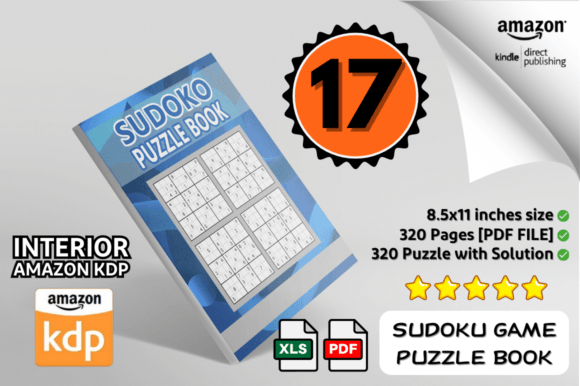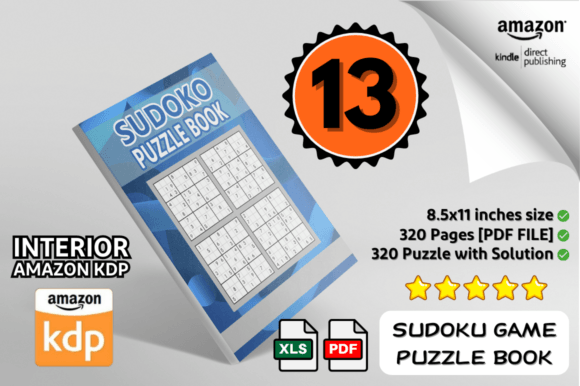
Sudoku Puzzle Book Hard Part 13: A Strategic Tool for Sharper Thinking and Better Decisions
When most people think about Sudoku, they picture a casual pastime—something to fill time on a commute or unwind before bed. But a carefully designed puzzle collection like the Sudoku Puzzle Book Hard Part 13 serves a different purpose entirely. This volume, part of a series that spans 320 puzzles from very easy to very hard, offers a deliberate mental workout for adults who value clarity, logic, and sustained focus. The “Hard” label isn’t just a difficulty marker; it signals that these grids demand planning, pattern recognition, and the ability to hold multiple possibilities in working memory. For entrepreneurs, marketers, educators, freelancers, and other professionals, that kind of cognitive conditioning translates directly into better decision-making and more effective problem-solving at work.
What Makes Hard Sudoku a Strategic Investment in Your Cognitive Toolkit
Hard puzzles—especially those in a graded series—are not about random number placement. They require a layered approach: scanning rows, columns, and boxes simultaneously, identifying constraints, and iterating hypotheses. The Sudoku Puzzle Book Hard Part 13 is curated to push solvers past rote techniques and into deeper logical reasoning. This mirrors the strategic thinking needed to evaluate business scenarios, assess project risks, or refine content strategies. Every grid becomes a microcosm of real-world planning: you have incomplete information, you test assumptions, and you adjust your approach when a dead end appears.
The value of such a book lies in its structure. Unlike an app that buzzes with notifications or a website that auto-fills candidates, a print or dedicated puzzle book eliminates distractions. You interact with the grid directly, which reinforces mental discipline. Adults aged 20–50 who juggle multiple responsibilities—running a small business, managing a team, creating content, or teaching—often struggle with fragmented attention. Working through a hard Sudoku in this book forces sustained concentration for 15 to 30 minutes, a practice that builds the same stamina required to analyze a complex market report or map out a quarterly campaign.
When and How to Use Hard Puzzles to Support Your Goals
Integrating the Sudoku Puzzle Book Hard Part 13 into your routine is not about adding another task to a to-do list. It is about choosing the right moment to engage your executive functions. Many professionals find that tackling a hard puzzle early in the morning—before email and meetings—sets a tone of deliberate thinking. Others use it as a mid-afternoon reset when decision fatigue sets in. The key is intentional timing: use the puzzle not as a break from work but as a form of mental rehearsal.
Aligning Puzzle Difficulty with Your Work Demands
If you are in a role that requires constant evaluation of alternatives—such as marketing channel selection or product feature prioritization—the hard puzzles train you to hold multiple variables in mind without jumping to conclusions. For example, a content strategist might practice the same logic she uses to weigh keyword difficulty, search intent, and content gaps. The puzzle forces you to delay satisfaction and explore possibilities before committing a number. That restraint is directly applicable to planning: you resist the urge to launch a half-baked campaign because you’ve trained yourself to check all constraints first.
Using the Book as a Collaborative Tool
While Sudoku is often solitary, the Sudoku Puzzle Book Hard Part 13 can serve a team-building function. A small business owner might print a puzzle for a weekly team meeting, asking everyone to contribute a logical step. This exercises collective reasoning and surfaces how different people approach the same problem. Educators can use it to demonstrate planning sequences to students, and freelancers can share the challenge with peers as a low-stakes way to sharpen communication around decision-making processes.
Planning Your Puzzle Sessions for Long-Term Cognitive Benefit
Randomly solving hard puzzles yields only short-term entertainment. To extract lasting strategic value, approach each session with a plan. The book already includes solutions, but resist the temptation to glance at them prematurely. Instead, use the following framework to turn each grid into a learning opportunity:
- Pre-session warm-up: Spend two minutes scanning the entire grid. Identify rows, columns, or boxes with the most given numbers. This mirrors the planning phase of any project—taking stock of available resources and constraints before acting.
- Set a time goal: For the first few puzzles, aim for completion without time pressure. Later, impose a reasonable limit (e.g., 20 minutes) to simulate deadlines. This trains you to maintain accuracy under time constraints—valuable for entrepreneurs facing launch windows or educators managing class time.
- Post-session review: After checking the solution, note where you hesitated or made false assumptions. Did you miss a hidden single? Did you overlook a subset? These gaps reveal mental habits that might affect your real-world decisions, such as jumping to conclusions or failing to check all variables.
This planning approach transforms the Sudoku Puzzle Book Hard Part 13 from a pastime into a structured cognitive exercise. Over time, you develop a sharper intuition for when to switch strategies—a skill that directly benefits budgeting, project planning, and customer experience design.
Practical Examples of Strategic Decisions Influenced by Hard Puzzles
Consider an operations manager who uses the puzzle book during her lunch break. She learns to scan for contradictions early, a habit that carries over to reviewing supply chain schedules. When she spots a potential bottleneck, she does not panic; she systematically tests alternative routes, just as she tested candidate numbers in the grid. The confidence gained from completing hard puzzles reduces the stress of high-stakes operational choices.
Another example: a blogger or publisher working on editorial calendars. Hard Sudoku trains the mind to think in sequences—placing one number affects the whole board. Designing a content plan works the same way: choosing a topic influences keywords, internal links, and publication dates. The puzzle book reinforces a systems-thinking mindset, helping creators see how each decision ripples across their strategy.
Risks of Using Hard Puzzles Without Clear Goals
Not everyone benefits equally from diving into hard puzzles without context. Some users become frustrated when a grid takes too long or repeatedly ends in errors. This frustration can diminish motivation and even create negative associations with analytical tasks. The risk is especially high for individuals who rely on the book as a quick stress reliever but lack the patience for the slower, more demanding pace of hard puzzles. Without a clear purpose—such as improving concentration or practicing logical deduction—the experience can feel like a chore rather than a strategic tool.
Another pitfall is overconfidence. Solving hard puzzles at home does not automatically make someone a better decision-maker in dynamic environments. The controlled, constrained world of a 9×9 grid is not the same as a volatile market or a complex team conflict. Users should treat the puzzle as a supplementary exercise, not a substitute for real-world practice. Finally, neglecting the solutions section defeats its purpose: using the answer key blindly teaches nothing, while reviewing it thoughtfully reinforces learning. The Sudoku Puzzle Book Hard Part 13 provides solutions for a reason—use them as a feedback mechanism, not a crutch.
What to Consider Before Relying on This Book for Brain Training
Before committing to the entire volume or using it as part of a professional development routine, ask yourself a few questions:
- What specific outcome do you want? If your goal is to improve attention to detail, focus on accuracy rather than speed. If you want to enhance pattern recognition, vary the time you spend on each puzzle.
- Are you willing to reflect on mistakes? Whipping through puzzles without analyzing errors yields minimal growth. Build in five minutes after each puzzle to review incorrect placements and reasoning gaps.
- Does the difficulty align with your current mental stamina? The series includes easier levels; starting with “Very Easy” before moving to “Hard” may provide a better foundation. Jumping straight to hard puzzles without mastering basics can lead to frustration and wasted time.
- How will you transfer learned skills to your work? Keep a small notebook or digital note to record specific insights (e.g., “Today I caught a logical contradiction early because I checked all three constraints.”). Later, apply those observation habits to a real business or creative challenge.
Long-Term Value of a Carefully Curated Puzzle Collection
The Sudoku Puzzle Book Hard Part 13 is not a one-time purchase; it is part of a series that allows progressive challenge. As you move through the book, the puzzles force you to discard comfortable techniques and adopt more sophisticated strategies—just as professionals must evolve their methods as their careers develop. The physical format also offers a break from screen time, which many adults find refreshing for mental clarity. Over several weeks or months, regular practice with hard puzzles can sharpen the same cognitive muscles that support better planning, clearer communication, and more resilient problem-solving.
When used intentionally, this puzzle book becomes a reliable tool for mental conditioning. You learn to hold space for uncertainty, to test assumptions without guilt, and to persist through complexity. Those are qualities every decision-maker—whether an entrepreneur, marketer, educator, or freelancer—can put to work every day. The Sudoku Puzzle Book Hard Part 13 delivers more than entertainment; it delivers a framework for clearer thinking in a world that rarely offers neat rows and columns. Grab your copy, set a plan, and treat each grid as a small investment in a sharper mind.