Skyscraper Puzzles for Young Children: A KDP Guide
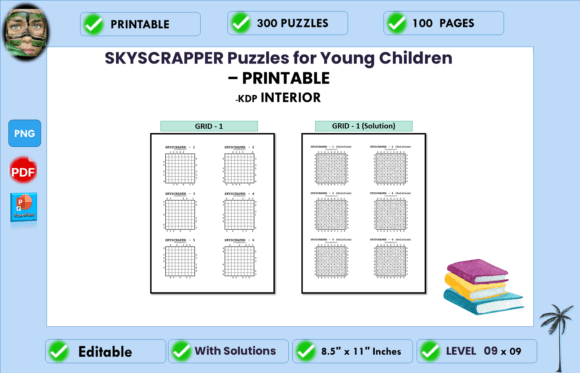
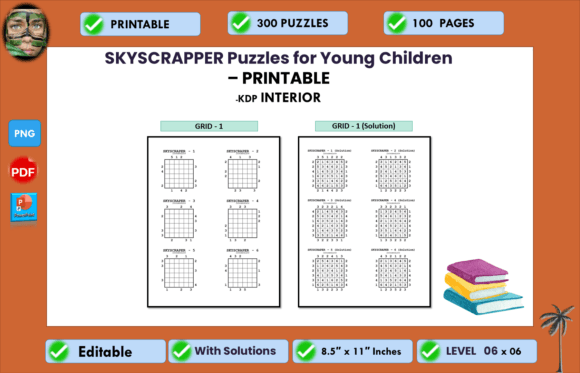
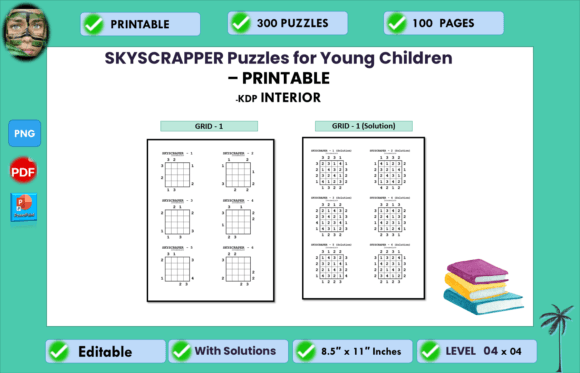
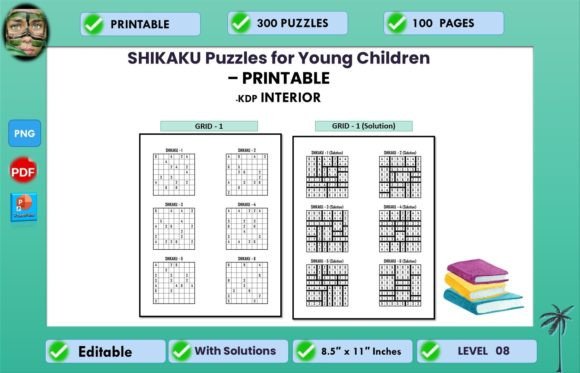
Skyscraper puzzles for young children offer a fresh and engaging way to introduce logical thinking to early learners. Unlike traditional number puzzles that can feel abstract or intimidating to a child, skyscraper puzzles use visual height and ranking concepts that are intuitive and fun. Each puzzle presents a grid where numbers represent building heights, and the clues along the edges tell you how many buildings you can see from that direction. For an eight-year-old, this transforms into a delightful game of stacking towers and figuring out which building goes where. The interior format designed for KDP publishing makes this puzzle type immediately accessible to creators, educators, and parents who want ready-to-use content that is both educational and entertaining.
What Makes Skyscraper Puzzles Unique for Young Learners
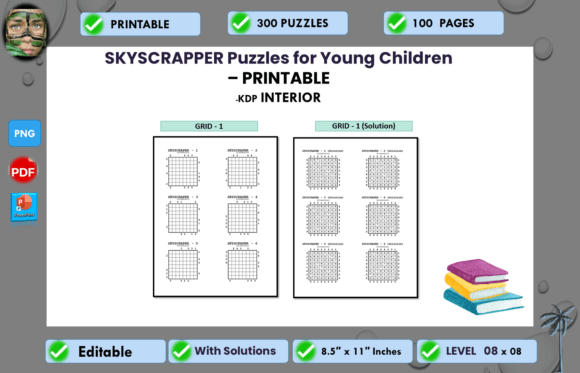
At its core, a skyscraper puzzle asks the solver to place numbers in a grid so that each row and column contains every number exactly once, while also respecting the visibility clues from each side. For a child of eight, this combines basic number placement with spatial reasoning and deduction. The visual metaphor of buildings and skyline views makes the logic tangible. A child can imagine standing at the edge of a city and counting how many skyscrapers are visible, with taller buildings blocking shorter ones behind them. This concrete imagery helps young minds grasp the rules quickly without needing to understand abstract algebraic concepts. The 8.5 x 11 inch format with 100 pages provides ample room for large, clear grids that are easy for small hands to write or draw in, and the no-bleed design ensures crisp printing without content getting cut off.
Why Different Audiences Value This Puzzle Interior
The skyscraper puzzle interior serves multiple purposes depending on who is using it. For a parent looking to supplement their child's learning at home, the puzzles offer a screen-free activity that builds critical thinking and patience. A single puzzle might take ten to twenty minutes, making it perfect for after-school quiet time or weekend mornings together. The included solution pages mean parents can check answers quickly without needing to solve each puzzle themselves, which is a practical time saver. For a homeschool educator, the puzzles align well with math and logic curriculum goals, especially around sequencing, comparison, and deductive reasoning. They can be used as warm-up exercises, challenge activities, or even group problem-solving tasks where children discuss their strategies aloud.
For a KDP publisher or content creator, this interior represents a turnkey product that requires only a cover design before uploading. The 100 editable pages come in PDF, PPT, and PNG formats, giving flexibility for further customization or direct use. The high-resolution, print-ready files eliminate the need for formatting adjustments, which reduces technical hurdles. A publisher with multiple puzzle books can add this title to their catalog quickly, targeting the niche of logic puzzles for younger children. The five-star feedback expectation is realistic when the puzzles are well-constructed and age-appropriate, as parents and educators appreciate thoughtful content that actually engages kids.
For a small business owner running a print-on-demand shop, this interior offers a product with broad appeal. Puzzle books consistently perform well in categories like education, games, and children's activities. The skyscraper format is less common than Sudoku or word searches, which means less competition in a specific sub-niche. A business owner can market this as a unique alternative to standard puzzle books, emphasizing the developmental benefits and the fresh challenge it presents. The ready-for-printing status means the only ongoing cost is cover design and listing fees, making it a low-overhead addition to any product line.
Evaluating Ease of Use and Practical Setup
Getting started with this interior requires minimal technical skill. The PDF file is prepared for KDP upload with 100 numbered pages and a clean layout that matches Amazon's specifications. The no-bleed setting means you do not need to worry about trimming margins or content being lost in the binding. For someone new to KDP publishing, this removes a common source of errors that cause rejections or poor-quality printed books. The PPT format allows easy edits if you want to adjust font sizes, add your own branding, or localize content for different markets. The PNG files provide individual page images that can be used for preview thumbnails or promotional materials. A freelancer or hobbyist can upload the interior and have a live listing within a day, assuming they have a suitable cover ready.
From a quality standpoint, the high-resolution interior ensures that lines remain sharp and numbers are clearly readable when printed. Young children often work with pencils and erasers, so crisp, dark printing helps them see their marks clearly. The 8.5 x 11 inch page size gives enough space for larger grids and writing areas, reducing frustration for children who are still developing fine motor control. The solution pages are placed at the back of the book, which allows children to check their work independently or for an adult to verify answers without flipping through the entire book. This design choice respects both the child's autonomy and the adult's need for efficiency.
Who Benefits Most from This Puzzle Style
A child who enjoys visual games, building toys, or drawing skylines will likely take to skyscraper puzzles naturally. The puzzles reward careful observation and step-by-step thinking, which benefits children who may struggle with more abstract math worksheets. For a child who finds traditional number puzzles boring, the skyscraper theme adds a layer of storytelling and imagination. They can invent names for the buildings or draw details around the grid once the puzzle is solved, extending the activity into a creative project. This dual appeal of logic and creativity makes the interior particularly useful for educators who want to reach different learning styles within one classroom.
For an experienced puzzle enthusiast or educator reviewing this interior, the key evaluation points are puzzle variety, difficulty progression, and solution accuracy. A well-designed set of 100 puzzles should start with smaller grids and simpler clue patterns, gradually introducing larger grids and more complex constraints. This allows a child to build confidence before tackling harder challenges. The interior's editable nature means a creator can reorder puzzles, add hints, or insert instruction pages if desired. A professional educator might appreciate the flexibility to adapt the content for different age levels or to align with specific learning objectives. The commercial value lies in the time saved from not having to create puzzles from scratch, while still offering a product that feels custom and thoughtful.
Long-Term Usefulness and Learning Value
Skyscraper puzzles teach skills that extend beyond puzzle solving. Logical deduction, systematic trial and error, and the ability to hold multiple constraints in mind are all cognitive abilities that support math, science, and reading comprehension. For a child who works through all 100 puzzles, they will have practiced these skills many times over in a context that feels like play rather than drill. The sense of accomplishment from solving a puzzle independently builds confidence and persistence. For a parent or educator, observing how a child approaches a puzzle provides insight into their problem-solving strategies and areas where they might need additional support. This diagnostic value is something a simple worksheet may not offer.
For a publisher, the long-term usefulness of this interior includes the ability to create series or bundles. Once you have one volume of skyscraper puzzles, you can produce additional volumes with different grid sizes, themes, or difficulty levels. The editable formats make it straightforward to modify and expand. The interior can also serve as a lead magnet or bonus content for other educational products. A blogger or content creator might use sample pages as free downloads to build an email list, knowing that the puzzles are professional enough to leave a positive impression. The commercial potential extends beyond the initial sale, as satisfied customers often leave the kind of positive feedback that drives organic sales.
Matching the Product to Your Goals
If you are a parent or educator seeking a low-prep activity that genuinely teaches logic, this interior is a strong fit. The 100 pages provide weeks of content, and the age range of eight and up is appropriate for most second and third graders. If you are a creator or publisher looking for a reliable KDP interior that meets Amazon's formatting standards with no bleed and correct dimensions, the file set delivers exactly that. The inclusion of multiple formats gives you flexibility without requiring design software expertise. If you are a business owner wanting to test a new puzzle category, this product minimizes risk through low upfront effort and proven appeal. The key is to pair the interior with a cover that communicates the fun and educational value clearly, so browsers understand what makes skyscraper puzzles different from other logic books.
Before purchasing, consider whether the difficulty level matches your audience. A child who has never done a logic puzzle before may need a parent or teacher to explain the rules and guide them through the first few puzzles. An eight-year-old with some puzzle experience will likely be able to work independently after a brief introduction. The interior assumes no prior knowledge, but the instructions are minimal. You may want to add a brief how-to page if you customize the PPT version. For most users, the puzzles are intuitive enough that a short demonstration is all that is needed. The solutions at the back provide a safety net for checking work and for learning from mistakes when a child gets stuck.
Final Thoughts on Choosing Skyscraper Puzzles for Kids
Skyscraper puzzles for young children fill a specific and valuable niche in educational publishing. They blend visual reasoning with number sense in a way that feels fresh compared to more common puzzle types. The KDP-ready interior format removes technical barriers, allowing creators to focus on marketing and cover design. For parents and educators, the puzzles offer a reliable tool for developing critical thinking without screen time. For publishers and business owners, they represent a scalable product with proven demand and room for differentiation. The 8.5 by 11 inch size, 100 pages, and no-bleed design are all practical choices that prioritize usability and print quality. Whether you are buying this for your own child or for your publishing catalog, the skyscraper puzzle format is worth considering for its educational merit and commercial potential.