Pack Cover Kids Unicorn Coloring VOL 2: A Practical Guide to Making Better Choices with Your Book Covers
When you are creating low content or no content books for platforms like Amazon KDP or other print on demand services, the cover is often the first thing a potential buyer sees. It is not just decoration—it is a signal of quality, professionalism, and the experience a child or parent can expect inside. The Pack Cover Kids Unicorn Coloring VOL 2 offers four ready-to-use covers, but getting the most out of this template requires more than just dropping it into your book file and hitting publish. Many creators make a few common mistakes that can hurt sales, reduce perceived value, or cause unnecessary frustrations later. Let’s walk through what this pack actually includes, what to watch out for, and how to use it in a way that supports your goals without wasted effort or disappointment.
Understanding What You Get and Why It Matters
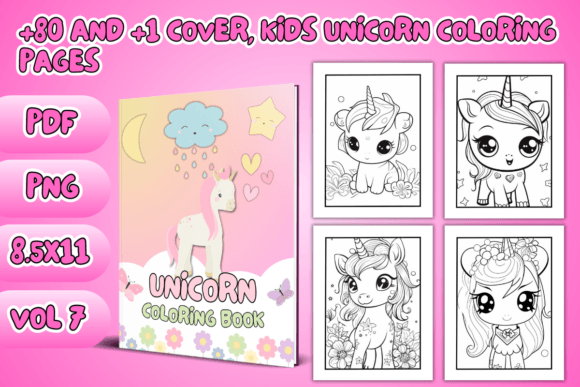
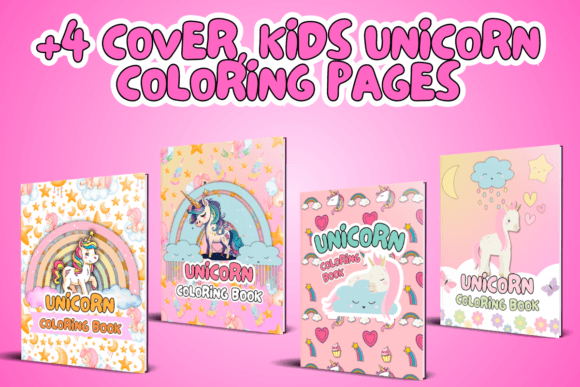
The Pack Cover Kids Unicorn Coloring VOL 2 provides four high quality covers in both PNG and PDF formats. Each cover measures 17.48″ x 11.25″. That size is important because it matches a specific trim size often used for coloring books and activity books aimed at young children. If you are new to self-publishing or print on demand, it is easy to overlook the exact dimensions and assume any cover can be resized without loss. That assumption is one of the more common mistakes people make, and it can lead to blurry images, distorted graphics, or covers that do not meet a platform’s strict upload requirements.
These covers are designed to be print ready, which means the resolution, color profile, and layout have been prepared with commercial printing in mind. The PNG format gives you a transparent or flattened image file that is easy to preview and manipulate in design software. The PDF format is often preferred for direct upload to KDP or similar platforms because it preserves the cover’s layout and color accuracy. Having both options gives you flexibility, but only if you understand when to use each one.
Common Mistake: Ignoring the Cover Size and Bleed Requirements
One of the most frequent errors I see with pre made cover packs is that people assume the file is ready for upload without checking the trim size, bleed, or spine width. The Pack Cover Kids Unicorn Coloring VOL 2 comes with a fixed size of 17.48″ x 11.25″. That is a landscape oriented cover designed for a specific interior page count and binding type. If your book has a different number of pages, the spine width changes, and the cover will not align correctly. This is not a flaw in the pack—it is simply a tool that works best when you match it to the right interior setup.
Before you use any of these covers, confirm your interior page count and calculate the spine width using the formula provided by your print on demand platform. If you are publishing a 60 page coloring book versus a 100 page book, the spine width is different. Using a cover that was designed for a different page count can result in a cover that looks misaligned or has text cut off. To avoid this, either adjust your interior page count to match the intended cover dimensions, or use design software to reposition elements. Many people skip this step and end up with covers that are rejected during review or look unprofessional once printed.
Overlooking the Difference Between PNG and PDF
Another detail that trips up many creators is not understanding why both file formats are included. The PNG files are excellent for quick previews, mockups, and editing in programs like Canva, Photoshop, or Affinity. They allow you to layer text, adjust colors, or add your own branding elements like a series logo or author name. The PDF files, on the other hand, are typically the best choice for final upload because they embed fonts, maintain color profiles, and are less likely to shift when processed by a printer.
A practical mistake is to use the PNG file for final upload without checking resolution or color mode. PNG files can sometimes default to RGB color space, which is fine for screens but not ideal for print. Print on demand platforms usually expect CMYK for best color accuracy. If you upload an RGB cover, the colors may appear dull or slightly different than expected. The PDF files in this pack are more likely to be set up correctly for print, so when you are ready to publish, start with the PDF version and only use the PNG for editing or testing. That small choice can save you from ordering a proof and discovering the colors are off.
Mistaking a Cover for a Complete Brand Solution
Many people buy a cover pack like this and think the work is done. While these four covers are high quality and charming, they are not a substitute for a cohesive brand across your entire book series or author page. A common oversight is to use the same cover for every book without adding any unique identifiers—no title, no author name, no subtitle. That might be fine if you are creating a test product or a very simple activity book, but if you want to build a recognizable series, you need to customize each cover with consistent fonts, placement, and color accents.
For example, if you are publishing a series of unicorn coloring books for different age groups, each volume should feel connected but distinct. You might use one of the four covers as a base and add volume numbers, age recommendations, or descriptive subtitles. Without these additions, customers browsing on Amazon may not understand what makes each book different. This is a missed opportunity to build trust and encourage repeat purchases. I recommend creating a simple template in your design software where you overlay your title, author name, and any series branding elements on top of the PNG files. Keep the font style friendly and legible, and ensure the text does not overlap key artwork elements like the unicorn’s face or the title area.
Not Checking Platform Guidelines Before Uploading
Each print on demand platform has its own rules for cover files. KDP requires covers to meet specific DPI, color space, and file size limits. If you upload a PDF that is not formatted to their exact specifications, you may see error messages or your cover might be automatically resized, which can distort the image. The Pack Cover Kids Unicorn Coloring VOL 2 is designed with typical KDP guidelines in mind, but it is always wise to double check current requirements. Platforms update their rules periodically, and what worked last year might need a small adjustment today.
A practical approach is to download the cover template from your platform of choice and compare it to the files in this pack. If the dimensions match closely, you are in good shape. If there is any discrepancy, you can adjust the canvas size or add a few millimeters of bleed using your editing software. Many small publishers skip this verification step and waste time re uploading files after rejection. Taking fifteen minutes to verify the files can save you hours of troubleshooting later.
Underestimating the Value of Consistency Across Formats
If you plan to sell your coloring book on multiple platforms—Amazon, Etsy, Barnes & Noble Press, or your own website—you will need to adapt the cover for different listing requirements. Some platforms require a front cover only, while others need a full wrap including spine and back cover. The files in this pack include back and spine elements, which is excellent. However, you might need to create separate versions for digital mockups, social media promotions, or preview images.
One mistake is to use the exact same file for everything without adjusting resolution or format. For an Amazon listing image, a JPEG version of the PNG file might work fine, but for a print ready upload, you want the PDF. Keep track of which file is which, and label them clearly in your folder structure. A simple naming convention like “Unicorn_Vol2_Front_PNG” and “Unicorn_Vol2_Full_PDF” helps you avoid uploading the wrong version at the wrong time.
Practical Advice Before You Buy or Use This Pack
If you are considering the Pack Cover Kids Unicorn Coloring VOL 2, start by clarifying your project’s scope. Are you creating one book, or a series? Do you already have a color palette or font style in mind? How many pages will your interior have? These questions guide how you use the four covers effectively. If you are a beginner, do not feel pressured to customize every cover immediately. It is perfectly fine to start with one cover, test your listing, and see how the market responds before investing more time.
Another practical step is to open the PDF file in a program like Adobe Acrobat or Preview and check that all layers are flattened and no fonts are missing. If you plan to edit the cover extensively, use the PNG version as your base layer and keep a copy of the original PDF untouched. This way, if your edits cause issues, you can always revert to the original file without losing quality. Many creators make the mistake of editing the only PDF they have, accidentally saving over it, and then struggling to recover the original design.
Lastly, consider the age range of your audience. Unicorn themes are popular with children roughly ages three to eight, but within that range, preferences differ. Younger children may prefer simpler covers with bold outlines and bright pastels, while older kids might enjoy more detailed illustrations. The four covers in this pack appear to be thoughtfully designed with broad appeal, but if your specific audience skews very young or very old within that range, you might want to adjust colors or add age indicators on the cover. This is not a requirement, but it can help parents quickly decide if your book is right for their child.
Making the Most of High Quality Cover Files
The fact that this pack includes four high quality covers is a significant advantage. Many pre made cover sets offer only one or two options, leaving you with limited choice. Having four distinct designs means you can test different cover styles with the same interior or create a small series that feels cohesive but varied. Avoid the temptation to use all four covers for four identical books. Instead, think of them as four opportunities to reach slightly different customer preferences. One cover might appeal to children who love pink and glitter, while another might attract parents looking for a more whimsical, fairy tale aesthetic.
If you are an educator or a small business owner creating custom activity books for your clients or students, these covers can be customized with your own branding. Add your logo, change the title, or include a call to action on the back cover. The PNG format makes this relatively straightforward, even if you are not a professional designer. Keep your edits clean and avoid cluttering the cover with too many elements. The artwork itself is a strong selling point, so let it remain the focal point.
Final Thoughts on Using Pack Cover Kids Unicorn Coloring VOL 2
This cover pack is a practical tool for anyone entering the low content or no content book space, especially if you are targeting the popular unicorn niche. The quality of the covers is solid, the format options are useful, and the landscape size fits a common book type. However, the difference between a successful launch and a frustrating experience often comes down to how well you prepare before you hit upload. Checking dimensions, understanding format differences, customizing for your brand, and verifying platform guidelines are not optional steps—they are the foundation of a professional result.
By avoiding the common mistakes outlined here, you can use the Pack Cover Kids Unicorn Coloring VOL 2 to create books that look polished, appeal to your target audience, and perform well on any print on demand platform. Take the time to match your interior page count, choose the right file format for each stage of your workflow, and add your own unique touches that set your book apart. With a little extra care, these four covers can become a reliable part of your publishing toolkit for months or even years to come.