Anxiety Journal Canva Template: Features, Fit, and Practical Considerations
For individuals navigating anxiety, a structured outlet can sometimes be more effective than an open-ended notebook. The Anxiety Journal Canva Template is a resource designed to bridge the gap between flexible expression and guided introspection. It offers a complete set of tools packaged into a print-ready PDF and an editable Canva link, making it a versatile option for both personal use and self-publishing. This article evaluates the template’s components, potential benefits, and tradeoffs to help you determine if it aligns with your specific goals for managing anxiety or creating content for others.
Understanding the Anxiety Journal Canva Template
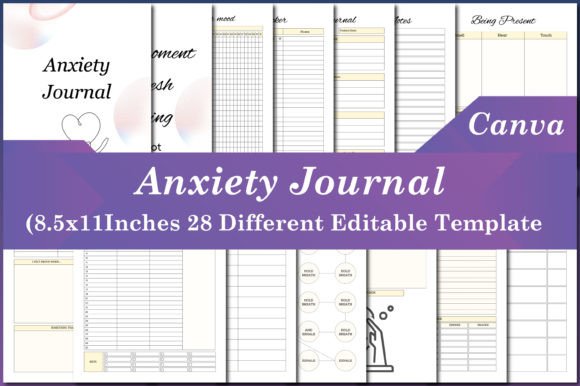
At its core, this is a digital package providing a pre-designed 30-page journal. The primary deliverables are a high-quality PDF file optimized for printing—featuring CMYK color, 300 DPI resolution, a standard 8.5x11 inch trim size, and no bleed—plus an editable Canva template link. This dual format is a defining characteristic. The PDF serves as an immediate, tangible product for those who prefer handwriting their entries, while the Canva link allows for meaningful customization of prompts, colors, or sections before printing or using the file digitally.
The journal is organized around specific therapeutic and organizational prompts rather than a generic diary format. It guides the user through various check-ins and analytical exercises. These include daily staples like the Sleep Tracker and Tension Check-in, deeper analytical tools such as Analyze Your Mood and Thought Reflection, and proactive planning components like the Crisis Plan and Appointment Planning. The inclusion of a Dream Journal and an Acknowledge Your Accomplishment section reflects a balanced approach, addressing both cognitive patterns and positive reinforcement. Additional resources like the List of Value Words and List of Emotion Words help users build a more precise vocabulary for their experiences, which is a foundational step in many therapeutic frameworks.
The Value of Structured Prompts for Managing Anxiety
The potential effectiveness of a tool like this lies in its ability to structure the journaling process. For someone experiencing anxiety, the initial step of staring at a blank page can itself be a barrier to starting a practice. The Anxiety Journal Canva Template removes this friction by providing clear, actionable prompts, which can be particularly helpful when motivation or mental energy is low.
Cognitive Offloading and Pattern Recognition: The prompts for Thought Reflection and Beyond My Control help externalize racing thoughts, a key technique in cognitive behavioral approaches. Over time, combined with the Mood Tracker and Sleep Tracker, these entries allow the user to identify trends. You might notice that disrupted sleep often precedes a day of higher tension, or that specific triggers repeatedly appear in the "Beyond My Control" column. This data-centric view of one's internal state can be empowering, moving the user from a feeling of chaos to one of measurable observation. The Monthly Health Check-in and Yearly Life Goals sections provide a high-level view that complements these daily details, appealing to those who like to plan and review their progress systematically.
Comprehensive Safety Net: The Crisis Plan file is a particularly noteworthy component for anxiety management. Many journals focus only on daily reflection, but a plan for high-stress moments is an essential part of a well-rounded toolkit. Having a pre-defined, accessible plan can significantly reduce the cognitive load during a difficult moment. The Deep Breath Assistance and Tension Check-in prompts also serve as immediate in-the-moment tools, offering practical grounding techniques that go beyond simple logging.
Evaluating the Tradeoffs and Practical Constraints
While this structured approach is a clear strength, it is important to evaluate the potential limitations based on your specific workflow and preferences. A balanced assessment requires acknowledging both the advantages and the constraints.
Customization vs. Readiness: The editable Canva link is a major advantage for those who wish to tailor the journal to their exact aesthetic or functional needs. However, it requires a baseline comfort with Canva's editing tools. If you prefer a "print and go" solution with no setup, the provided high-quality PDF serves this purpose immediately. The tradeoff here is between personalization and convenience. For publishers, this editable link is particularly valuable as it allows for rebranding or minor content adjustments to create a unique product.
Print Specifications and Format: The template is built for a standard 8.5x11 inch page with no bleed and 300 DPI. For self-publishers using Amazon KDP, these specifications ensure a crisp, professional interior that meets Amazon's requirements for standard trim sizes. The "no bleed" setting simplifies the upload process significantly. However, if you have a strong preference for specific journal sizes (such as A5 or 6x9) or if you intend to use a binding method requiring full bleed, you will need to adjust the dimensions within Canva. This is feasible but requires additional effort and attention to detail. For personal home printing, 8.5x11 is a very convenient and cost-effective size that works well with standard printers and binders.
The Risk of Overwhelm: A 30-page journal with multiple specialized trackers is comprehensive. This breadth is beneficial for exploring different facets of your anxiety and building a robust practice. However, some users may find the number of distinct prompts—from Deep Breath Assistance to Yearly Life Goals—to be more than they need to start. A minimalist who only wants to log a single sentence per day or a single habit might find the template's structure too demanding. In this case, the template is best used selectively, printing only the pages that resonate with the user's current needs rather than feeling obligated to complete the entire book.
Scenarios Where This Template is a Strong Fit
Understanding when this resource provides the most value can help clarify your decision.
- The Self-Publisher on KDP: If you are creating a low-content or medium-content book for Amazon KDP, this template offers a tested, high-quality interior that is ready for upload. The inclusion of both the print-ready PDF and the editable Canva link allows you to make minor tweaks to the design or content to create a unique product, while the 30-page count and standard dimensions keep production straightforward. The tested format reduces the risk of publishing errors related to trim size or color requirements.
- The Therapist, Coach, or Educator: For professionals who need reproducible handouts for clients or students, this template saves significant preparation time. The collection of exercises like the Tension Check-in, Crisis Plan, and List of Emotion Words provides a solid foundation for psychoeducation and homework assignments. The clean, print-ready format ensures that handouts look professional and are consistent across sessions.
- The Structurally-Inclined Individual: If you are someone who appreciates clear frameworks and measurable data, the trackers and assessment forms in this journal will likely feel natural and supportive. The ability to see mood patterns, track sleep quality, and reflect on accomplishments in a structured way can provide a sense of control and clarity that is difficult to achieve with an unstructured notebook.
- The Beginner Journaler: Someone new to journaling for anxiety may find the variety of prompts helpful for discovering what works for them. The template provides a sample of different techniques—from gratitude-oriented prompts to analytical thought logs—without requiring the user to design the system themselves.
Considering Alternatives: When It Might Not Be the Right Fit
No single tool is ideal for every situation. Recognizing when an alternative might serve you better is an important part of making an informed choice.
- The Digital-Only User: If you strictly use a tablet for note-taking and prefer a hyperlinked, interactive PDF that works directly in apps like GoodNotes or Notability, this template's primary strength—a print-ready PDF with an editable Canva link—may not align with your preferred workflow. While the Canva link offers digital editing capabilities, the design is optimized for a printed workbook format rather than an interactive digital journaling experience with pre-set navigation.
- The Minimalist or Stream-of-Consciousness Journaler: Some of the most effective journaling comes from completely unstructured writing. If prompts feel like a constraint rather than a guide, a simple lined or dotted notebook might be a better tool. This template requires engagement with specific sections and prompts, which can be counterproductive if you find that structure inhibits your natural flow and expression.
- The User Seeking a Single, Deep Protocol: The Anxiety Journal Canva Template covers a wide range of topics and techniques. If you have a very specific need—for instance, a deep dive into a specific therapeutic technique like CBT worksheets, a dedicated gratitude-focused practice, or a workbook centered on a specific condition—a more specialized book that dedicates all its pages to that single subject may offer more targeted depth and focus.
- The User Who Prefers a Different Format: The 8.5x11 inch size is standard for printing but may be too large for someone who wants a pocket-sized journal for carrying throughout the day. While the Canva link allows resizing, doing so requires design work and may affect the layout of the existing prompts.
Practical Questions to Guide Your Decision
Before committing to a journaling system, it can be helpful to clarify your primary goal and your current habits. Consider the following:
What is your primary objective? Is it to identify patterns in your mood and sleep? The tracking pages in this template are well-suited for that analytical purpose. Is it to have a creative, pressure-free emotional outlet? You might find the prompts too directive for that specific need.
What is your technical comfort level? Are you comfortable using the editable Canva link to modify the template to your exact taste or publishing requirements? If so, the format offers substantial room for adaptation. If you prefer a finished product with no setup, the included print-ready PDF meets that need directly without requiring any technical skills.
How do you plan to use it? If you are a publisher, evaluate whether the included files match your target format for KDP. They offer a low-risk entry point for a popular niche, but you should verify that the content aligns with your brand. For personal use, assess whether the variety of exercises—from the Dream Journal to the My Notes section—will be used consistently, or if a simpler notebook might yield a more sustainable daily habit.
Ultimately, the Anxiety Journal Canva Template serves as a comprehensive toolkit. Its value is highest when its structured approach aligns with the user's need for guidance, pattern recognition, and a clear starting point. By weighing the convenience of its print-ready design against the depth and specificity of its prompts, you can make an informed choice that best supports your routine, your therapeutic goals, or your publishing objectives.