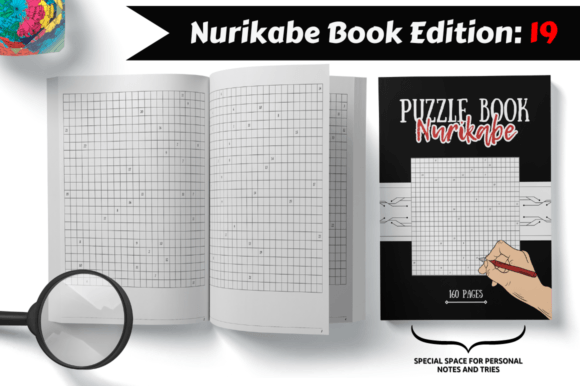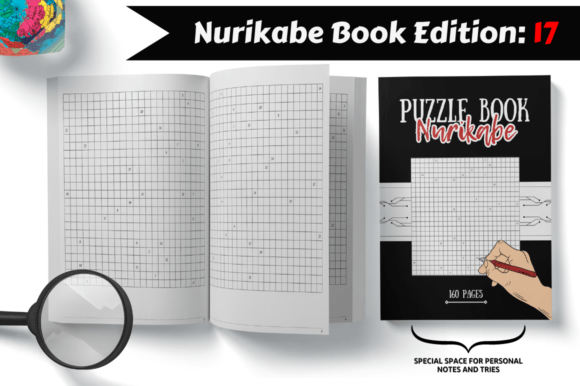
2000 Nurikabe Puzzles Printable PDFs: A Practical Digital Workbook for Logic Enthusiasts and Content Creators
When you need a reliable source of structured logic puzzles that work across multiple use cases—from personal brain training to commercial publishing—a well-organized PDF compilation saves time and effort. The package titled 2000 Nurikabe Puzzles Printable PDFs delivers exactly that: three separate files containing 2000 unique puzzles across three grid sizes, paired with complete solutions. This is a digital download product, meaning you receive the files immediately after purchase and print them yourself on standard 8.5 x 11 or A4 paper. You can reproduce the pages as often as you like for personal or commercial purposes, including use on print-on-demand platforms such as KDP.
This article walks through what these PDFs contain, where they fit into different workflows, and how you can integrate them smoothly into your own routine or business.
What the Product Includes
The offering is straightforward: three PDF files, each focused on a specific grid size, with a total of 2000 Nurikabe puzzles. Here is the breakdown:
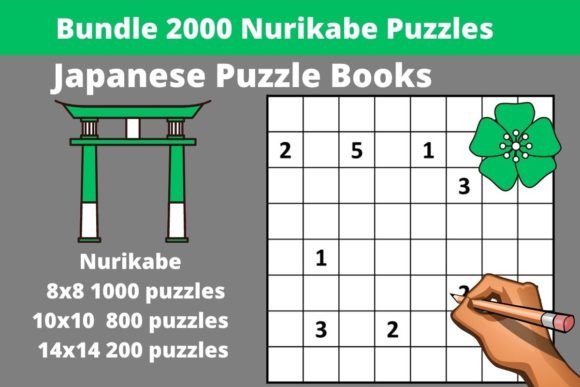
- File 1 – 8x8 grid: 1000 puzzles and their solutions, packed into a 342-page PDF.
- File 2 – 10x10 grid: 800 puzzles and their solutions, filling an 800-page PDF.
- File 3 – 14x14 grid: 200 puzzles and their solutions, contained in a 400-page PDF.
Each puzzle appears on its own page, and solutions are included at the end of each file (or interleaved depending on your preference when printing). This structure makes the collection suitable for both casual solving and bulk printing. Because it is a digital download, you control how and when you produce physical copies.
Where Nurikabe Fits in a Broader Routine
Nurikabe is a logic puzzle where you shade cells to create an island of connected white cells while satisfying numerical clues. It demands systematic reasoning, pattern recognition, and careful planning. For many adults, engaging with this kind of puzzle serves more than just entertainment—it provides a structured mental warm-up, a focused break during a work session, or a wind-down activity at the end of the day.
Within a productivity context, these puzzles slot naturally into several points of a typical workflow:
- Before a project or task: Solving one or two puzzles can shift your mind into a logical, methodical mode. This is especially useful if you are about to tackle analytical work, writing, coding, or any task that requires sustained attention.
- During a creative or decision-making process: When you hit a mental block, switching to a constrained logic puzzle like Nurikabe offers a clean break. The puzzle's rules force you to think step-by-step, which can help reset your cognitive momentum without straying too far from focused thinking.
- After completing a major task: A puzzle session can serve as a low-demand reward that still keeps your brain engaged, rather than collapsing into passive scrolling. It provides a sense of closure and small achievement before moving to the next item on your list.
Because the PDFs contain multiple grid sizes, you can match the challenge level to your available time and mental energy. A quick 8x8 puzzle takes only a few minutes; a 14x14 puzzle demands a longer, deeper session.
Interacting with Other Tools, Platforms, and Methods
These PDFs are designed to work across a range of environments, from personal use to commercial production. Here are the most common integrations:
Print-on-Demand Platforms (KDP, Lulu, etc.)
If you publish puzzle books on Amazon KDP or similar services, this collection gives you ready-made content. Because the puzzles are already laid out in a print-ready PDF with solutions, you can upload them directly after a simple cover design. The commercial license lets you sell these puzzles as part of your own publications. You can combine grids from different files to create mixed-size puzzle books, or use each file as a standalone volume.
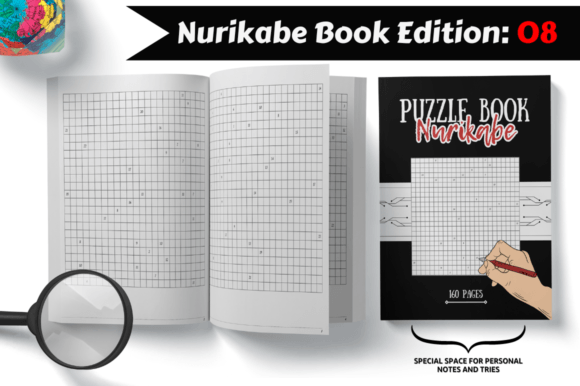
For KDP specifically, the page counts (342, 800, and 400 pages) align well with standard book categories. You can adjust trim size, margins, and bleed within a PDF editor if needed, but the base formatting works on 8.5 x 11 or A4 paper.
Classroom and Educational Settings
Teachers and tutors can use these puzzles as supplementary material for logic and problem-solving exercises. The 8x8 grid is ideal for beginners or younger students, while the 10x10 and 14x14 grids offer more challenge for advanced learners. Because you can print unlimited copies, there is no need to ration pages. You can hand out single puzzles, assemble weekly worksheets, or create a binder of puzzles for early finishers.
Printing and Physical Organization
You can print these files on any home or office printer that handles 8.5 x 11 or A4 paper. For heavy use, consider the following practical points:
- Paper quality: Standard 20 lb copy paper works fine for solving with pencil or pen. If you plan to erase repeatedly, a slightly heavier paper (24 lb or 28 lb) reduces show-through.
- Binding: Three-hole punch the pages and store them in a binder by grid size. This keeps your collection organized and allows you to pull out specific puzzles as needed.
- Printing only solutions: You can print the solution pages separately and keep them in a sealed envelope to avoid accidental peeking.
- Duplex printing: To save paper, print the puzzle pages double-sided. Each puzzle occupies one page, so this works without overlap.
Digital Workflow Integration
If you prefer working on a tablet or computer, these PDFs can be used with annotation apps such as GoodNotes, Notability, or Adobe Acrobat Reader. Import the file, use a stylus or type-based annotation, and save your progress. This eliminates the need for printing altogether and keeps your puzzle library portable across devices.
Practical Implementation Tips
To get the most out of this puzzle collection, consider how you plan to use it over the long term.
Start with the 8x8 Grid
The 1000-puzzle file is your entry point. Even if you are familiar with Nurikabe, the smaller grid allows you to verify the puzzle quality and printing clarity before committing to larger prints. Solve a handful of puzzles to confirm that the difficulty progression feels right for your audience or personal taste. If you are using these commercially, test the customer experience by showing a few sample solves to a colleague or beta reader.
Batch Print by Difficulty or Grid Size
Rather than printing all 2000 puzzles at once, print batches based on your current need. For a weekly puzzle club, print 10–20 puzzles from the 8x8 file each week. For a publication project, print the entire 800-page 10x10 file and check for any formatting adjustments. Batch printing reduces setup time and paper waste.
Combine Grid Sizes for Variety
A single puzzle book or binder can include all three grid sizes. Order them from smallest to largest to create a natural difficulty ramp. This keeps solvers engaged and prevents monotony. For commercial products, this variety can be a selling point—customers appreciate having multiple challenge levels in one purchase.
Track Solving Times for Progress
If you use these puzzles personally, note your solving time on each page. Over a few weeks, you will see trends: which grid size you solve fastest, whether your accuracy improves, and how long a typical session lasts. This data can help you decide which puzzles to include in a publication for a specific audience (e.g., quick warm-up puzzles vs. extended brain teasers).
Quality Control and Consistency
Because these are digital files, you take on the role of quality control when printing. Here are a few checks to run before committing to a large print run:
- Preview the PDF: Open each file and scroll through a random sample of pages. Verify that all puzzles display correctly, that the grid lines are crisp, and that the numbered clues are legible.
- Print a test page: Print one puzzle page and one solution page. Check alignment, margins, and readability. Adjust printer settings if needed (e.g., print in grayscale, set scaling to 100%, or center the page).
- Check solution accuracy: Solve a few puzzles from different parts of the file and compare your result to the provided solution. This confirms that solutions match the puzzles.
Once you have verified a file, you can confidently print the rest or upload it to a POD platform.
Long-Term Use and Scalability
This collection is not a one-time resource. Because you own the files and have a commercial license, you can reuse them in multiple contexts across years. Here are a few scenarios:
- Personal improvement: Revisit the puzzles after a few months. Your solving speed and strategy will likely improve, and you can track growth.
- Classroom refresh: Print fresh copies each semester without worrying about running out. Vary which grids you assign to keep material new.
- Multiple publications: Create several puzzle books from the same source files—one focused on 8x8 puzzles, another a mixed collection, and a third a large-print edition. Each uses the same content but different formatting or covers.
- Gift or bundle: Combine these puzzles with other logic puzzles you own to create themed bundles for sale or personal use.
The scalability comes from the PDF format itself: it never degrades, you can duplicate it instantly, and it integrates with nearly any digital or print workflow.
Usability Observations Worth Noting
Over time, you may notice patterns in how these puzzles fit into your day. The 8x8 grid works well for short breaks—waiting for a meeting to start, standing in line, or a five-minute reset between tasks. The 10x10 grid hits a sweet spot: challenging enough to require focus but short enough to finish in one sitting. The 14x14 grid is best reserved for dedicated puzzle sessions or when you want a deeper cognitive workout.
If you are publishing commercially, the 800-page 10x10 file is particularly interesting. At that page count, it creates a substantial book with many puzzles per dollar for the end customer. The 342-page 8x8 file is also solid for a lower-price entry-level product. The 200-puzzle 14x14 file works well as a premium or challenge edition.
Because solutions are included, your customers (or your own future self) will never be stuck without a way to verify work. Some solvers prefer solutions at the very end of the book; others like them on the reverse of each page. Since these are PDFs, you can reorder pages before printing if you want a different layout.
Practical Workflow Examples
Here are two real-world ways to integrate these PDFs into an existing routine:
Example A – Personal Brain Training
Download and open the 8x8 PDF on your tablet. Solve one puzzle each morning as part of a five-minute cognitive warm-up. After a few weeks, switch to the 10x10 file for a slightly longer session. At the end of each month, review the solved pages to identify which clue patterns you find tricky. Over three months, you will have worked through dozens of puzzles and built a clear sense of your strengths and weaknesses.
Example B – Selling on KDP
Design a simple cover for a 100-puzzle excerpt from the 10x10 file. Use the PDF as-is, but add a title page and a "How to Solve" guide. Upload to KDP, order a proof, and check the printed quality. Once satisfied, publish and repeat with the 8x8 and 14x14 files as separate books. Because the puzzles are pre-made and tested, your production time is limited to cover design and formatting adjustments.
Final Considerations
The 2000 Nurikabe Puzzles Printable PDFs offer a practical, flexible resource for anyone who values structured logic puzzles—whether for personal enrichment, educational use, or commercial publishing. The digital download format gives you immediate access, unlimited printing, and the freedom to use the content across multiple projects. By matching grid size to your available time and using the included solutions for verification, you can integrate these puzzles smoothly into your daily routine or product lineup. No physical product ships, and no special equipment is needed—just a computer, a printer, and the willingness to solve.